Introduction to Healthy Smoothie Recipes
Healthy Smoothie Recipes are an easy and delicious way to include fruits, vegetables, yogurt, milk, and other nutritious ingredients in your daily diet. Whether you need a quick breakfast, a refreshing afternoon drink, or a convenient snack after exercise, homemade smoothies can offer a flexible option for different lifestyles. By choosing the right ingredients, you can prepare flavorful drinks without relying on expensive café beverages or smoothies loaded with added sugar.
One of the biggest advantages of healthy smoothie recipes is their versatility. Bananas, berries, mangoes, spinach, oats, Greek yogurt, and seeds can be combined in many different ways. Some smoothies provide protein, while others are rich in fiber, vitamins, and minerals. You can also adjust their texture and sweetness according to your personal preferences.
However, not every smoothie is automatically healthy. Large portions, excessive fruit juice, sweetened yogurt, and added syrups can increase the sugar and calorie content. Understanding the ingredients and their nutritional value can help you make better choices.

In this article, we will explore eight powerful healthy smoothie recipes, their benefits, potential risks, and practical tips for preparing balanced smoothies at home.
Table of Contents
- Why Healthy Smoothie Recipes Are Popular
- 8 Powerful Healthy Smoothie Recipes
- Benefits of Healthy Smoothies
- Hidden Risks of Healthy Smoothie Recipes
- Healthy Smoothie Comparison Table
- Protein Content Graph
- Tips for Making Better Smoothies
- Frequently Asked Questions
- Conclusion
Why Healthy Smoothie Recipes Are Popular
Healthy smoothie recipes are popular because they are quick to prepare and easy to customize. Many recipes require only a blender and a few ingredients, making them convenient for busy mornings and afternoon snacks.
Smoothies can also help people consume a wider variety of foods. For example, spinach can be blended with banana and yogurt to create a mild-tasting green smoothie. Oats can add texture and fiber, while nuts and seeds provide healthy fats and additional nutrients.
Another advantage is flexibility. Fresh, frozen, or locally available seasonal fruits can be used according to your budget. Frozen fruit is particularly convenient because it creates a thick texture without requiring ice.
Although smoothies can contribute to a nutritious diet, they should not automatically replace every whole-food meal. Chewing whole fruit can be more satisfying for some people, and blending does not make the calories or natural sugars disappear.
8 Powerful Healthy Smoothie Recipes
1. Healthy Smoothie Recipes with Banana and Oats
A banana and oats smoothie is a practical breakfast option for people who want a filling drink made from simple ingredients. Bananas contribute carbohydrates and potassium, while oats provide fiber and help create a thicker texture.
Ingredients: One medium banana, two tablespoons of rolled oats, one cup of milk or an unsweetened fortified plant-based alternative, and a pinch of cinnamon.
Preparation: Add the banana, oats, milk, and cinnamon to a blender. Blend until smooth. If you prefer a thinner consistency, add a little more milk. For additional protein, you can use plain Greek yogurt or milk with a higher protein content.
This smoothie works well when you need a quick breakfast before school or work. The oats contribute fiber, while the banana provides natural sweetness, so additional sugar is usually unnecessary.
For a more balanced meal, consider serving it with another nutritious food if the smoothie alone does not satisfy your hunger.
Picture 1: A creamy banana and oats smoothie in a glass, with banana slices and rolled oats arranged beside it.

2. Healthy Smoothie Recipes with Berries and Greek Yogurt
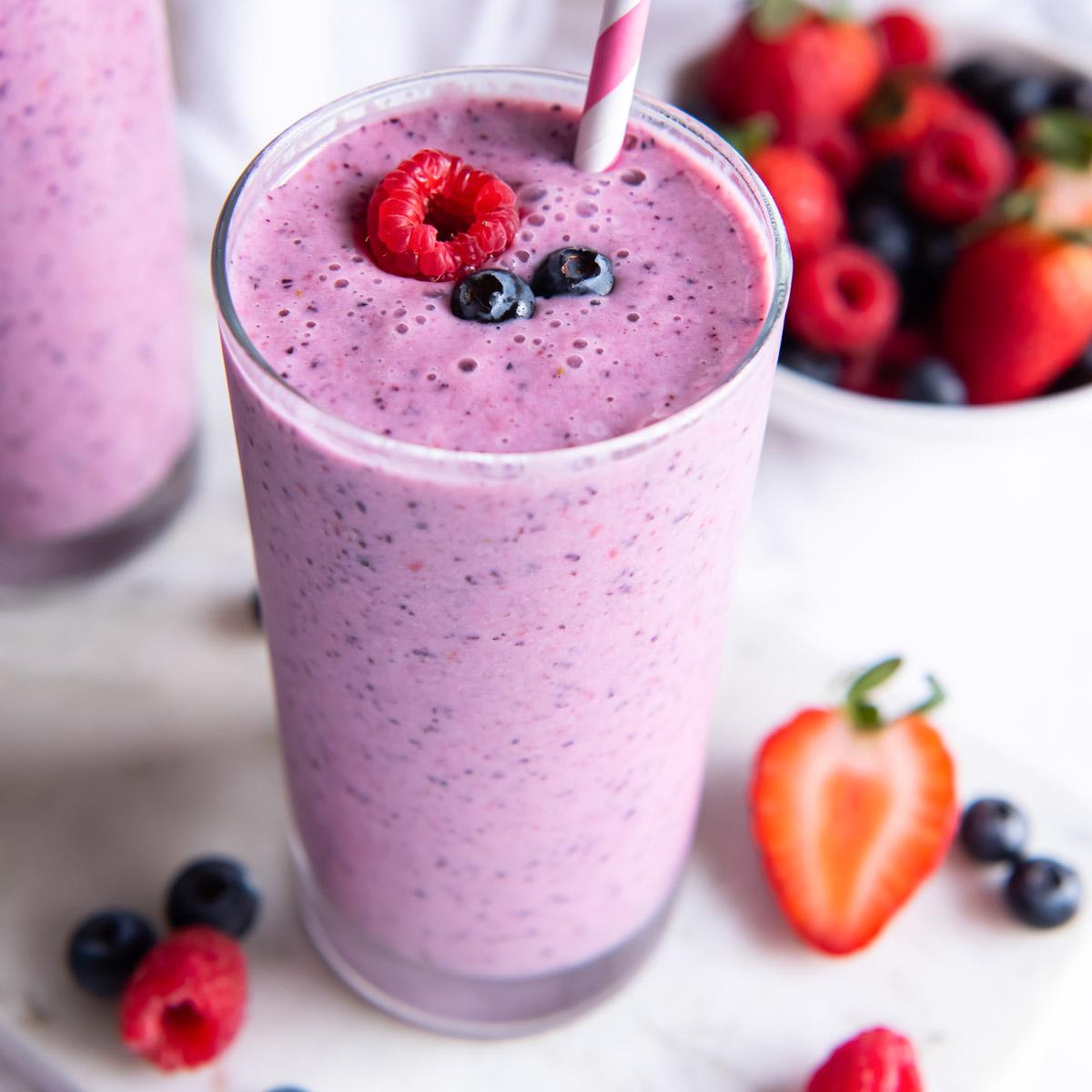
A berry and Greek yogurt smoothie combines fruity flavor with protein. Strawberries, blueberries, and other berries provide color, flavor, and beneficial plant compounds, while Greek yogurt can contribute substantial protein.
Ingredients: One cup of mixed berries, half a cup of plain Greek yogurt, half a cup of milk or water, and a few ice cubes if desired.
Preparation: Place the berries, yogurt, and liquid in a blender. Blend until smooth, adjusting the liquid according to your preferred thickness. Frozen berries can be used directly and often create a naturally thick texture.
This recipe is useful for breakfast or as a snack after physical activity. The yogurt provides protein and calcium, while the berries contribute fiber and vitamins.
Choose plain yogurt instead of heavily sweetened varieties to keep added sugar lower. You can adjust the flavor with a few drops of lemon juice rather than adding syrup.
3. Healthy Smoothie Recipes with Spinach and Apple
A spinach and apple smoothie is a refreshing option for people who want to include vegetables in their daily routine. The apple provides natural sweetness, while spinach contributes folate, vitamin K, and other nutrients.
Ingredients: One small apple, one handful of fresh spinach, half a banana, half a cup of water, and a little lemon juice.
Preparation: Wash the spinach and apple thoroughly. Remove the apple core and cut the fruit into small pieces. Blend everything with the water and lemon juice until smooth.
The banana helps soften the flavor of the spinach, while lemon juice adds freshness. You can add plain yogurt if you want a creamier texture.
This smoothie can be a useful addition to a balanced breakfast, but it is not a substitute for eating a variety of vegetables throughout the day. People taking medicines that require consistent vitamin K intake should follow their healthcare professional’s advice about leafy greens.
4. Healthy Smoothie Recipes with Mango and Yogurt
A mango and yogurt smoothie is a flavorful choice for warm weather. Mango provides a naturally sweet tropical taste, while yogurt adds creaminess and protein.
Ingredients: One cup of chopped ripe mango, half a cup of plain yogurt, half a cup of milk or water, and a few ice cubes if needed.
Preparation: Add the mango, yogurt, and liquid to a blender. Blend until smooth, then adjust the consistency by adding more liquid if necessary.
Ripe mangoes are usually sweet enough without additional sugar. If fresh mangoes are expensive or unavailable, frozen mango can be a convenient alternative.
This smoothie provides carbohydrates for energy and can contribute vitamins and minerals to your diet. However, portion size still matters because mango contains natural sugars. Pairing the fruit with yogurt also adds protein, making the smoothie more balanced than a drink made only from fruit juice.
5. Healthy Smoothie Recipes with Peanut Butter and Banana
A peanut butter and banana smoothie is a creamy option for people who want a drink containing protein, carbohydrates, and fats. It can be useful as a snack for active individuals or as part of a more substantial breakfast.
Ingredients: One small banana, one tablespoon of peanut butter, one cup of milk, and a few ice cubes. Plain yogurt is an optional addition for extra protein.
Preparation: Combine all the ingredients in a blender and blend until creamy. Add a little more milk if the mixture is too thick.
Peanut butter provides protein and unsaturated fats, while banana contributes carbohydrates and potassium. Milk supplies additional protein and calcium.
Because peanut butter is calorie-dense, using a measured serving can help control the overall energy content. Choose a product with little or no added sugar when possible.
Anyone with a peanut allergy should avoid this recipe and choose a safe alternative, such as an appropriate seed butter, after checking its ingredients.
6. Healthy Smoothie Recipes with Pineapple and Coconut
A pineapple and coconut smoothie offers a tropical flavor with a refreshing texture. Pineapple contributes vitamin C, while coconut milk or coconut water changes the taste and nutritional profile.
Ingredients: One cup of pineapple chunks, half a cup of plain yogurt, half a cup of water or unsweetened coconut water, and a few ice cubes.
Preparation: Add all ingredients to a blender and process until smooth. For a thicker smoothie, use frozen pineapple. If you prefer a creamier version, replace some of the liquid with plain yogurt.
Pineapple contains bromelain, a group of enzymes that break down proteins, but drinking this smoothie should not be considered a treatment for medical conditions.
Be mindful of the liquid you choose. Canned coconut milk can contain considerably more fat and calories than coconut water, while sweetened coconut beverages may contain added sugar. Check the label to select the option that best fits your needs.
7. Healthy Smoothie Recipes with Avocado and Banana
An avocado and banana smoothie provides a rich, creamy texture without needing ice cream or sweetened cream. Avocado contains monounsaturated fats, while banana contributes carbohydrates and natural sweetness.
Ingredients: One-quarter of a ripe avocado, one small banana, three-quarters of a cup of milk or an unsweetened fortified alternative, and a little water if needed.
Preparation: Scoop the avocado flesh into a blender. Add the banana and milk, then blend until smooth. Adjust the consistency with water if necessary.
This smoothie can be useful when you want a more energy-dense drink. Avocado contributes fats and fiber, while milk can add protein and calcium.
However, avocado is relatively high in calories compared with many other fruits, so portion size is important if you are monitoring your overall energy intake. A small serving can provide plenty of flavor and creaminess.
8. Healthy Smoothie Recipes with Dates and Almonds
A date and almond smoothie is a naturally sweet option that combines fruit with nuts. It can be particularly appealing to people who prefer rich, nutty flavors instead of berry-based smoothies.
Ingredients: Two small dates, one tablespoon of almonds or unsweetened almond butter, one cup of milk, and a pinch of cinnamon.
Preparation: If the dates are firm, soak them briefly in warm water and remove their pits. Add the dates, almonds or almond butter, milk, and cinnamon to a blender. Blend until smooth.
Dates provide carbohydrates and some fiber, while almonds contribute unsaturated fats and a modest amount of protein. Milk adds protein and calcium, depending on the type used.
This smoothie can be satisfying, but dates and almonds both contribute calories, and dates contain concentrated natural sugars. Keep the portions moderate and avoid adding extra syrup unless it is genuinely needed.
Benefits of Healthy Smoothie Recipes
Healthy smoothie recipes can make it easier to include fruits, vegetables, dairy products, and other nutritious ingredients in everyday meals. Their greatest advantage is flexibility: you can combine ingredients according to your taste, budget, and dietary needs.
Another benefit is convenience. A smoothie can be prepared in a few minutes, which may help people avoid less nutritious convenience foods when they are short on time.
Smoothies can also provide a range of nutrients. Fruits contribute vitamins and plant compounds, leafy greens provide various micronutrients, and yogurt or milk adds protein and calcium. Oats, whole fruit, and seeds can contribute fiber, while nuts and avocado provide unsaturated fats.
The combination of ingredients matters. A smoothie containing fruit, yogurt, and oats offers a different nutritional profile from one made mainly with fruit juice and sweetened syrup.
For the best results, use smoothies as part of a varied diet that also includes whole fruits, vegetables, whole grains, and other protein sources.
Hidden Risks of Healthy Smoothie Recipes
Despite their benefits, healthy smoothie recipes can have drawbacks when ingredients and portions are not considered carefully.
One concern is excess sugar. Fruit naturally contains sugar, and blending whole fruit does not remove it. However, adding fruit juice, honey, syrups, sweetened yogurt, or flavored milk can increase the total sugar content significantly.
Another concern is calorie intake. Peanut butter, almonds, avocado, and full-fat dairy can be nutritious, but large quantities may make a smoothie much more energy-dense than expected. A large smoothie can also become less satisfying than a solid meal for some people.
Some smoothies may be low in protein. A drink made only with fruit and water might provide vitamins and carbohydrates but little protein. Adding plain yogurt, milk, or another suitable protein source can create a more balanced option.
Food safety is also important. Wash produce thoroughly, use clean equipment, refrigerate prepared smoothies promptly, and avoid leaving dairy-based drinks at room temperature for extended periods.
Finally, certain ingredients may not suit everyone. People with food allergies, lactose intolerance, kidney-related dietary restrictions, or specific medical needs may require ingredient substitutions or individualized advice.
Healthy Smoothie Recipes Comparison Table
The following table compares the main ingredients and general benefits of the eight recipes. Actual nutritional values depend on portion sizes, brands, and preparation methods.
| Smoothie recipe | Main ingredients | Key nutritional feature |
|---|---|---|
| Banana and oats | Banana, oats, milk | Carbohydrates and fiber |
| Berry and yogurt | Berries, Greek yogurt | Protein and fruit nutrients |
| Spinach and apple | Spinach, apple, banana | Vitamins and plant compounds |
| Mango and yogurt | Mango, yogurt | Protein and vitamins |
| Peanut butter and banana | Peanut butter, banana, milk | Protein and unsaturated fats |
| Pineapple and coconut | Pineapple, yogurt, coconut water | Vitamin C and hydration |
| Avocado and banana | Avocado, banana, milk | Fiber and unsaturated fats |
| Dates and almonds | Dates, almonds, milk | Energy and healthy fats |
Protein Content Graph for Healthy Smoothie Recipes
Protein content varies widely depending on the ingredients and serving size. The following approximate comparison assumes one serving prepared with the ingredients listed above. These are illustrative estimates, not laboratory-tested values.
Estimated protein per serving
Berry and Greek yogurt — 10–15 g
Peanut butter and banana — 9–11 g
Dates and almonds — 8–10 g
Mango and yogurt — 5–8 g
Avocado and banana — 5–8 g
Banana and oats — 5–8 g
Pineapple and coconut — 4–7 g
Spinach and apple — 1–3 g
The berry and Greek yogurt smoothie generally offers the most protein among these versions when prepared with a protein-rich yogurt. The spinach and apple smoothie is more focused on fruit and vegetables than protein. You can adjust any recipe by adding plain Greek yogurt or another suitable protein source.
Tips for Making Better Healthy Smoothie Recipes
The easiest way to improve your smoothies is to start with whole ingredients and limit unnecessary sweeteners. Ripe bananas and mangoes can provide enough sweetness without honey or sugar.
Use whole fruit instead of relying on juice as the main ingredient. Whole fruit retains its fiber, which can support digestion and contribute to fullness. Adding oats, seeds, or vegetables can increase the variety of nutrients in a smoothie.
Think about balance when selecting ingredients. Combine fruit with yogurt, milk, or a suitable alternative for protein. Add a modest portion of nuts, seeds, or avocado if you want healthy fats.
Frozen fruit can reduce preparation time and create a thicker texture. It may also help you use fruit that would otherwise go uneaten. However, always check that packaged ingredients have been stored appropriately.
Finally, pay attention to serving size. A smoothie does not need to contain six different fruits, several spoonfuls of nut butter, and added sweeteners to be nutritious. A few carefully chosen ingredients can create a delicious and balanced drink.
Frequently Asked Questions About Healthy Smoothie Recipes
What are the best Healthy Smoothie Recipes for breakfast?
Banana and oats, berry and Greek yogurt, and peanut butter and banana smoothies are convenient options. Adding a protein source and fiber-rich ingredients can help make breakfast more satisfying.
Are healthy smoothies good for weight management?
Smoothies can fit into a weight-management plan when their portion sizes and ingredients suit your overall energy needs. Whole fruit, vegetables, and appropriate protein sources can help create a balanced drink, but smoothies do not automatically cause weight loss.
Can I drink a smoothie every day?
Many people can enjoy a smoothie daily as part of a varied diet. Focus on balanced ingredients, reasonable portions, and limited added sugar. Include whole fruits and vegetables in other meals as well.
Which smoothie is best for protein?
A berry smoothie made with Greek yogurt is a good option. Peanut butter, milk, and other suitable protein-rich ingredients can also increase the protein content.
Are homemade smoothies better than store-bought smoothies?
Homemade smoothies give you more control over ingredients and portion sizes. Store-bought smoothies vary considerably, so check their nutrition labels for serving size, added sugar, and protein content.
Conclusion
These eight powerful healthy smoothie recipes offer delicious ways to enjoy fruits, vegetables, yogurt, oats, nuts, and other nutritious ingredients. From a simple banana and oats smoothie to a creamy berry and Greek yogurt blend, each recipe can fit different tastes and daily routines.
The key is to focus on balance rather than adding as many ingredients as possible. Choose whole fruits, include a suitable protein source when needed, limit added sweeteners, and keep portions appropriate for your needs.
Healthy smoothies can be a convenient addition to breakfast or snack time, but they work best alongside a varied diet. With a few simple ingredients and a blender, you can prepare refreshing drinks at home while making informed choices about nutrition, cost, and flavor.